RAMS template. A printable risk assessment and method statement — the hazards and controls on one side, the sequence of work on the other, and the briefing record that proves the gang was told.
This is the paper version. BuildOptix does the same job on a phone, with the record filed against the site and the operative automatically.
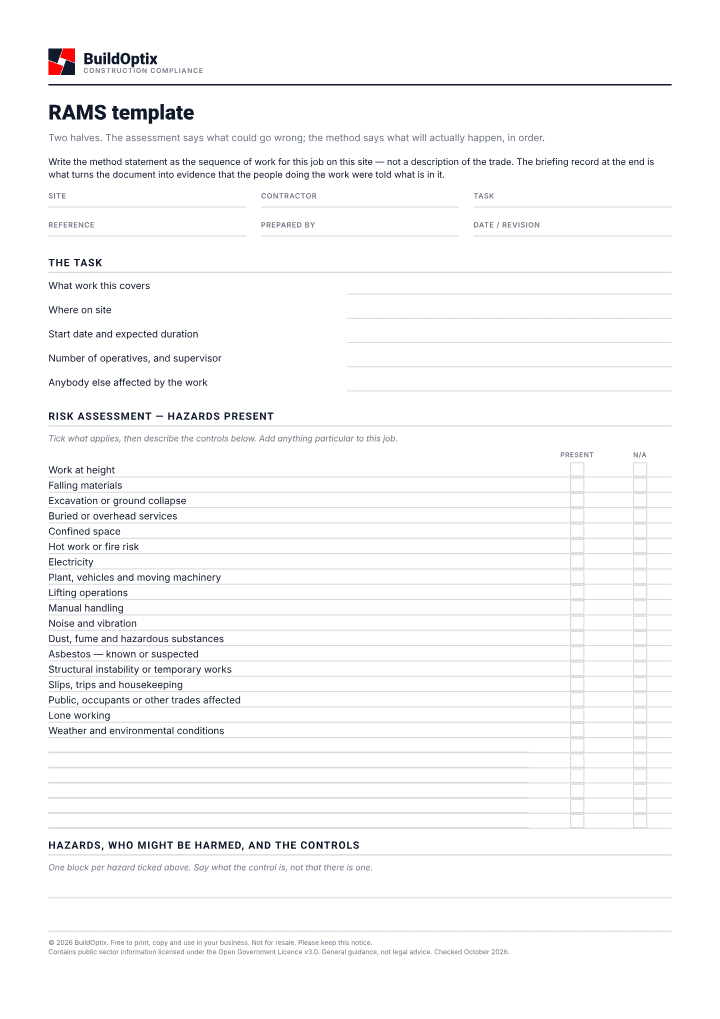
What is on the sheet
- Job, site, contractor, the task being assessed and the people doing it
- Risk assessment: hazard, who might be harmed, existing controls, further controls needed and the residual judgement
- Method statement: the sequence of work, step by step, in the order it will actually happen
- Plant, equipment, access and PPE the method depends on
- Permits, isolations and anything that must be in place before work starts
- A briefing record signed by everybody who will do the work, and a review block for when the method changes
Why this record matters
RAMS fail in a predictable way: the risk assessment is generic, the method statement describes a different job, and nobody doing the work has read either. An inspector can spot all three in about ninety seconds, because the document describes a task that does not match what is happening on site.
The two halves do different jobs and both are needed. A risk assessment lists what could go wrong; a method statement says what is actually going to happen and in what order. A document that lists hazards and controls but never says how the work will be done is a risk assessment with a cover page, and it is the commonest thing handed over as RAMS.
The briefing record is the half that makes the rest evidence. A RAMS in a folder proves somebody wrote it. A RAMS with the gang's signatures on it, dated the morning of the work, proves the people doing it were told what was in it — which is the question actually asked after an incident.
The review block matters more on RAMS than almost anywhere else, because the method changes on site constantly. The scaffold is not up yet so the sequence flips; the excavation is deeper than expected; a different machine turns up. Each of those makes the signed method statement a description of a job nobody is doing.
Use it with
- Construction phase plan templateA printable construction phase plan pro-forma covering the project, the arrangements for managing it, and the significant risks and how they are controlled.
- Subcontractor competence checklistA printable checklist for assessing a subcontractor before they start — organisational capability, insurance, RAMS, the people they are sending and the evidence behind each.
- Toolbox talk recordA printable toolbox talk record — the subject, what was actually covered, who attended, what they raised and what was done about it.
- Permit to workA printable permit to work for the jobs that need one — hot work, confined space, excavation, live services, roof work — with the precautions, the time limits and the hand-back on one sheet.
Read more on this
© 2026 BuildOptix. Free to print, copy and use in your business. Not for resale. Please keep this notice.
Contains public sector information licensed under the Open Government Licence v3.0. General guidance, not legal advice. Checked October 2026.